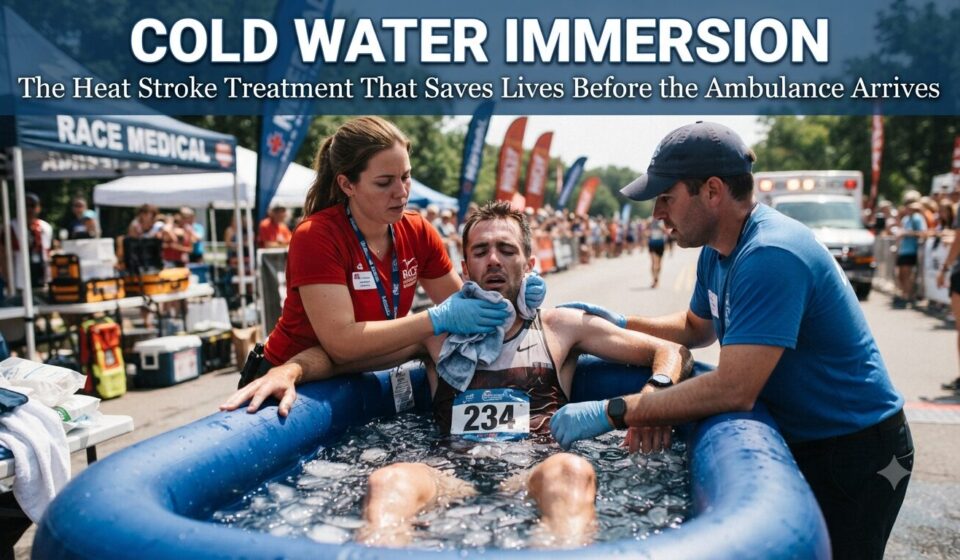
Cold Water Immersion: The Heat Stroke Treatment That Saves Lives Before the Ambulance Arrives

Summer heat doesn’t just make you uncomfortable. It can kill you in under an hour if your body temperature climbs too high and nobody acts fast. That’s the blunt truth behind a growing body of medical evidence: cold water immersion, not waiting for paramedics, gives heat stroke victims their best shot at survival.
What Makes Heat Stroke So Dangerous
Your body normally cools itself through sweat. But when the heat index spikes and you push through it anyway — during a hike, a work shift, or a long day outdoors — your internal cooling system can fail completely. Your core temperature rises past 104°F, and your organs start to struggle. Confusion, seizures, and organ failure follow if nobody intervenes.
Emergency responders warn that every extra minute at a dangerously high temperature raises the risk of permanent damage. That’s why the standard advice wait for an ambulance and do nothing ,no longer holds up.
Why Cold Water Works Faster Than Anything Else
Medical experts now say that submerging someone in cold water before help arrives can dramatically improve their odds and reduce lasting complications. Ice baths cool the body faster than fans, wet towels, or air conditioning. A stock tank, a kiddie pool, or even a bathtub filled with cold water and ice can pull core temperature down within minutes a window that often decides whether someone walks away or ends up with permanent organ damage.
This approach already has traction in sports medicine. Athletic trainers have used ice-water immersion for exertional heat stroke for years, and survival rates back it up. What’s changing now is the push to bring that same urgency to everyday emergencies — construction sites, hiking trails, backyard cookouts — not just locker rooms.
What You Should Actually Do
If you suspect someone has heat stroke, don’t wait for anyone else to tell you it’s serious. Call 911 immediately, then act:
- Move the person out of direct sun.
- Strip off excess clothing.
- Submerge them in the coldest water you can find — a tub, a livestock tank, even a cooler if that’s all you have.
- Keep them in the water until paramedics arrive or their symptoms clearly improve.
- Watch for confusion, vomiting, or loss of consciousness, and tell responders exactly when symptoms started.
Speed matters more than comfort here. Don’t worry about the water being “too cold” — that’s the entire point.
Who’s Most at Risk
Outdoor workers, athletes, older adults, and young children face the highest danger during heat waves. If you supervise a job site or coach a summer team, keep a cold-water source on hand and make sure everyone around you knows this isn’t optional advice — it’s a life-saving protocol.
For broader context on how this summer’s heat is affecting communities nationwide, see our related coverage on extreme weather trends across the US and how local governments are responding to heat emergencies.
You can also read more on the science behind rapid cooling techniques from NPR’s coverage of cold water immersion for heat stroke.
Editor’s note: This article is for general awareness and does not replace professional medical advice. If you suspect heat stroke, call 911 immediately.