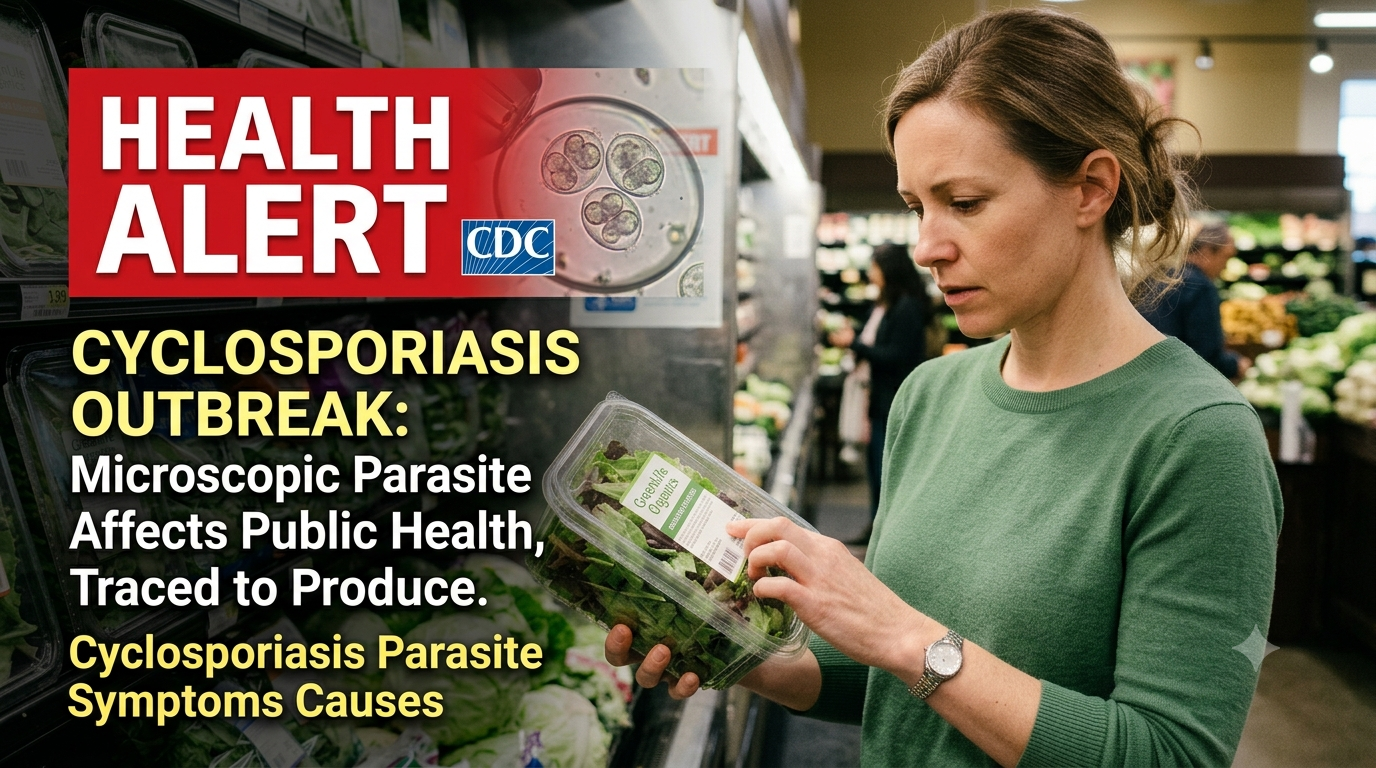

Federal health officials are currently tracking a major surge in severe stomach illnesses across the United States. Consequently, anyone researching cyclosporiasis parasite symptoms causes should know that cases are rising rapidly this summer. The Centers for Disease Control and Prevention (CDC) recently confirmed that hundreds of active infections are spanning over a dozen states. Specifically, Michigan and New York currently report the highest concentration of these cases.
This seasonal illness stems from Cyclospora cayetanensis, which is a microscopic, single-celled parasite. Generally, people ingest the organism through contaminated food or water. Because public health officials expect numbers to climb, recognizing the warning signs can protect your family.

Understanding Cyclosporiasis Parasite Symptoms Causes and Warnings
This microscopic invader specifically targets the human intestinal tract. Once swallowed, the parasite burrows into the small intestine to reproduce. Ultimately, this cellular disruption triggers a variety of severe gastrointestinal issues.
Indeed, the primary cyclosporiasis parasite symptoms causes include:
- First, frequent, watery, and sometimes explosive diarrhea.
- In addition, severe stomach cramps, painful bloating, and gas occur.
- Furthermore, patients suffer from a loss of appetite and rapid weight loss.
- Subsequently, persistent fatigue and general muscle aches will set in.
- Finally, nausea, occasional vomiting, and a low-grade fever are common.
Typically, these symptoms appear about one week after consuming a contaminated item. However, without medical intervention, the illness can torment a patient for over a month. Moreover, the symptoms frequently seem to disappear, only to return days later in a cycle of relapse.
How the Infection Spreads Through Food
Contaminated raw produce remains the primary vehicle for summer outbreaks. Therefore, the parasite enters the food supply when water contaminated with human feces sprays onto crops. Currently, federal health agencies are investigating several distinct clusters linked to grocery chains and restaurants.
Historically, past outbreaks frequently involved fresh, raw items that are difficult to wash thoroughly. For example, raspberries, fresh basil, cilantro, snow peas, and packaged salad mixes top the source list. Fortunately, cooking food thoroughly kills the parasite completely. Otherwise, raw summer dishes leave a clear opening for the bug.
Diagnosis, Treatment, and Prevention Steps
Importantly, standard medical stool tests often miss this specific parasite. As a result, if you experience prolonged diarrhea, you must explicitly ask your doctor for a specialized test. Once diagnosed, doctors quickly treat the infection using a standard course of sulfa-based antibiotics.
To prevent infection, always rinse fresh fruits and vegetables under heavy running water. Additionally, wash your hands thoroughly before and after handling raw food. Keep in mind that standard chemical bleach does not destroy this specific parasite. Thus, buying whole heads of lettuce instead of pre-washed bagged salads can significantly reduce your risk.