
The Water’s Rising in Texas Again, and Nobody There Wanted a Repeat of Last Year
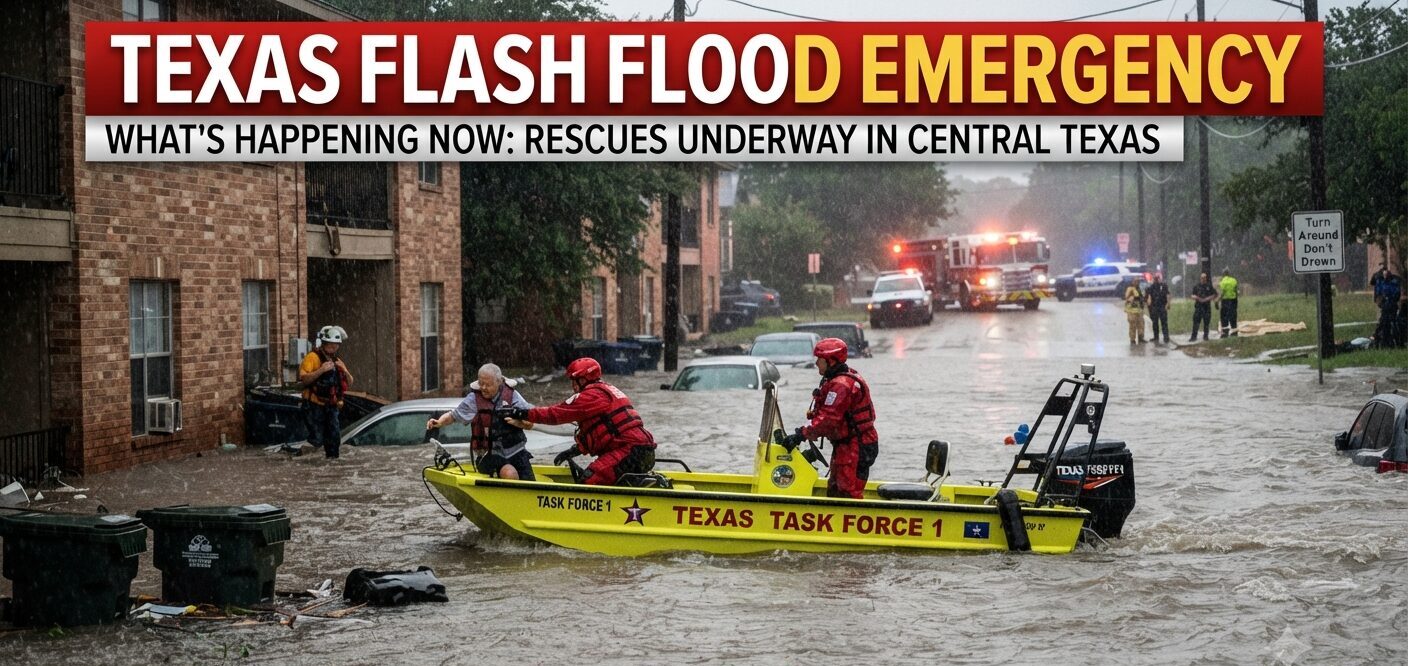
A Texas flash flood emergency is unfolding in Hill Country right now, almost exactly a year after Kerrville flooded in July 2025. The people who lived through that first flood are the ones saying this one feels worse.
Not necessarily because the water sits higher. Because they’d only just started sleeping through the rain again.
A stalled storm system has parked over the Hill Country for days now and won’t move. Uvalde took 7 inches of rain overnight Wednesday into Thursday. Streets went under fast. Rescue crews pulled more than 40 people out before the sun fully rose. A helicopter crew airlifted ten more off a barn roof near Kerrville. Engineers have closed several bridges in the region to check whether the flood damaged their structure.
Governor Abbott gave a number that’s hard to ignore. Last July’s flood dropped just over 20 inches of rain. This one could top 30.
At least two people have died so far. That number will likely change by the time you read this. Flood coverage moves fast, so check NWS or local news for the current count before you publish anything with a death toll in it.
Why Central Texas Keeps Facing Flash Flood Emergencies
Locals call it flash flood alley for a reason. The terrain out there is rocky and steep. Rain doesn’t soak in — it runs straight downhill into narrow river valleys, and those valleys hold most of the towns in the region. Add a slow-moving band of tropical moisture on top of that, which is exactly what’s sitting over the area right now, and rivers can rise faster than warning systems can track.
Several counties installed new sirens after last year’s floods. Residents said they never got a warning in time back then. Whether those sirens worked during this flash flood emergency is a real question once the immediate crisis passes.
The Health Risks Nobody Mentions During the Rescue Coverage
Helicopter rescues make the news. What happens after the water drops usually doesn’t — but it matters just as much for the people living through it.
Contaminated Water and Illness
Floodwater carries more than rain. It picks up sewage, fertilizer runoff, gasoline, and worse on its way through town. Anyone wading through it with even a small scrape faces a real infection risk. Gastrointestinal illness tends to spike in the weeks that follow. If your county issues a boil-water notice, take it seriously and don’t wait it out.
Mold Takes Hold Fast
Wet drywall, carpet, and insulation need to dry out within a day or two, or mold sets in and stays. That matters more than most people realize, especially for kids with asthma or anyone with existing respiratory problems.
Mosquitoes Move In
Standing water left behind draws mosquitoes, and mosquitoes bring a bump in West Nile cases a few weeks later — usually right when nobody’s watching flood coverage anymore.
Cleanup Causes More Injuries Than the Flood Itself
Chainsaws, downed power lines, people climbing onto damaged roofs — health officials say cleanup injuries outnumber flood injuries. It’s not dramatic, but it’s where a lot of real harm happens.
The Trauma Doesn’t Show Up on a Chart
For survivors of the 2025 floods, this week isn’t just property damage. It’s their nervous system snapping back to last July. One survivor said he wakes up during a normal rainstorm and runs to the door to check if the house is flooding. That’s not an overreaction. That’s what trauma does. It’s also why crisis counselors deploy alongside physical relief, not as an afterthought.
Bookmark the CDC’s flood recovery page now, before you need it.
Where Things Stand Right Now
More rain is still in the forecast. Several reservoirs across Central Texas have already hit capacity, so operators are releasing water downstream. That can keep river levels high even after the rain stops. This Texas flash flood emergency isn’t over yet.
The basics still apply. Don’t drive into water on the road, even if it looks shallow. Trust official alerts over whatever’s circulating on social media. Check on elderly or disabled neighbors who might not evacuate on their own.
Sources worth following as this develops: