
The intersection of global energy markets and sanctions against Russia has reached a volatile turning point. Consequently, American consumers are feeling the ripple effects directly at local gas stations.
Western nations originally designed price-cap restrictions to limit Kremlin revenues. However, they also wanted to keep the world’s oil supply moving. Now, unexpected shifts in supply chains are completely rewriting the rules of the energy trade.
For the average American, global oil updates are not just nightly news segments. Instead, these geopolitical events act as a primary driver of domestic inflation. Therefore, the tight correlation between global energy markets and sanctions against Russia forces U.S. regulators to adapt quickly.
How the Shadow Fleet Impacts American Supply Chains
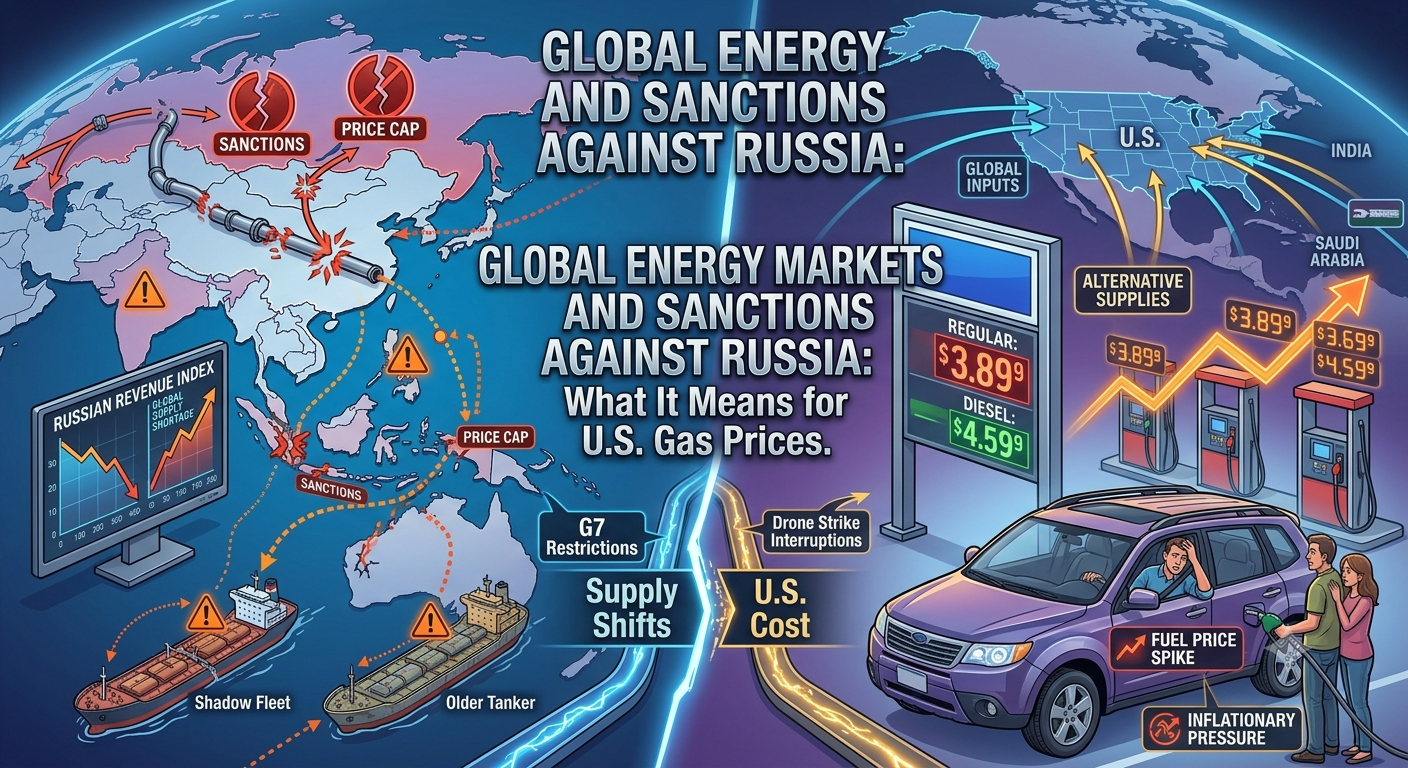
A major structural flaw complicates the relationship between global energy markets and sanctions against Russia. Specifically, a massive network of older, uninsured tankers operates completely outside G7 jurisdictions. Experts call this network the “shadow fleet”.
Recent data reveals that Russia transports over half of its seaborne oil via these shadow tankers. Furthermore, these ships frequently operate under false flags to bypass Western maritime restrictions.
Meanwhile, the G7+ coalition continues to push for stricter enforcement. Yet, this evasion keeps global oil flowing through highly unstable, secondary routes. As a result, this logistical volatility contributes to severe unpredictability in domestic fuel pricing. In particular, it impacts heavy commercial sectors like freight shipping, logistics, and construction industries.
| Core Buyer | Primary Energy Import Grade | Estimated Volume Share |
| China | Crude Oil (ESPO via Pacific ports), Pipeline Gas | ~41% of top export revenues |
| India | Seaborne Crude Oil (Record high volumes via international traders) | ~36% of seaborne crude |
| European Union | Natural Gas (Regulated pipeline & LNG transition contracts) | ~49% of Russian LNG exports |
Why Refining Disruptions Spike U.S. Pump Prices
The relationship between global energy markets and sanctions against Russia has grown even more complex. For example, Ukraine’s escalating long-range drone campaign introduces massive variables.
By targeting strategic processing units deep within Russian territory, the conflict sparked a severe internal Russian fuel crisis. Indeed, sustained hits on primary refining facilities dropped Russia’s domestic production rates to historic lows. Consequently, Moscow enacted strict domestic diesel export bans to protect its local markets.
This sudden reduction in refined oil product exports immediately tightened international fuel trade routes. Naturally, international buyers shifted their focus toward alternative refiners in India, Turkey, and Saudi Arabia.
The Cost to the American Consumer: Energy operates as a global commodity. Thus, when European and Asian buyers scramble to replace lost Russian supply, they drive up international crude benchmarks. This chain reaction instantly trickles down to American gas stations. Ultimately, it keeps U.S. regular retail gasoline and diesel fuel hovering at painful national averages.
In conclusion, these shifts prove just how fluid and interconnected global energy networks remain. Therefore, when an oil refinery burns thousands of miles away, American drivers feel the economic heat directly.
To see the direct strategic calculations behind these refining disruptions, read our full breakdown on Ukraine Energy Strike Strategy: Is It Working?