
Let’s be honest: when you’re dealing with thyroid stuff, it’s easy to feel like your entire life revolves around that one little pill you swallow first thing in the morning. You get your bloodwork checked, pick up your refill, and figure you’re doing everything right.
So why do you still find yourself dragging through a 3 PM slump or wondering why your jeans feel a little snug?
The truth is, your thyroid doesn’t operate in a vacuum. It’s basically the master thermostat for your entire body, and it’s surprisingly sensitive to the little things we do (or don’t do) every single day. If you’ve been feeling “off” even though your prescription is completely up to date, your daily routine might be secretly working against your metabolism.
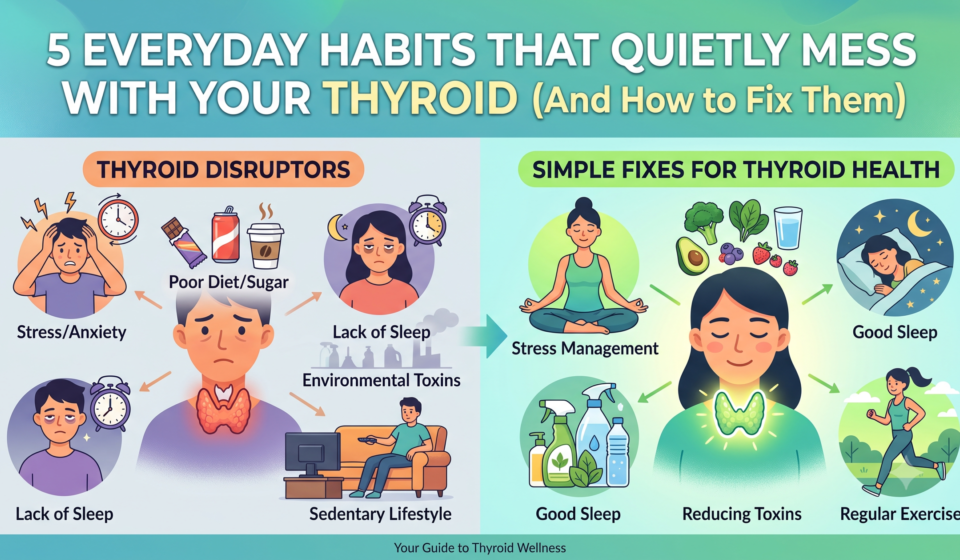
Here are five everyday habits that can throw your thyroid for a loop—and the simple ways to get things back on track.
1. Living in “Fight or Flight” Mode (Chronic Stress)
We all deal with stress, whether it’s a packed work inbox, family chaos, or just the general daily grind. But when you’re running on high stress all the time, your body pumps out a flood of cortisol.
Unfortunately, cortisol and thyroid hormones do not get along. High stress signals your brain to slow down thyroid hormone production and actually blocks your body from converting the inactive hormone (T4) into the active form (T3) that gives you energy.
-
How to fix it: You don’t need to quit your job and move to a cabin in the woods. Just carve out ten minutes a day to unplug. Go for a quick walk without your phone, try a few deep breathing exercises, or just sit quietly with your coffee. Giving your nervous system a breather helps lower cortisol and takes the pressure off your thyroid.
2. Burning the Candle at Both Ends (Bad Sleep Habits)
Your endocrine system is obsessed with routines. Staying up late scrolling through your phone, getting six hours of sleep, and trying to catch up on the weekend completely messes with your internal clock. When your circadian rhythm is out of whack, the hormonal feedback loops that regulate your metabolism take a direct hit.
-
How to fix it: Try to aim for a consistent sleep and wake window, even on weekends. And try dimming the lights or shutting off screens about an hour before bed. Your body (and your thyroid) will thank you for the deep, restorative rest.
3. Crash Dieting and Constant Calorie-Cutting
If you’re trying to out-exercise a sluggish metabolism by slashing your calories way too low, your body panics. It doesn’t know you’re trying to fit into your favorite clothes—it thinks you’re starving.
To protect you from a perceived “famine,” your thyroid naturally hits the brakes on your metabolism to conserve as much energy as possible. That’s why extreme diets often backfire and leave you feeling even more exhausted.
-
How to fix it: Stop starving yourself and focus on fueling your body. Make sure you’re getting enough protein, healthy fats, and complex carbs to keep your metabolism feeling safe, nourished, and happy.
4. Missing Out on Key Nutrients
Your thyroid can’t build hormones out of thin air; it needs raw materials. If your diet is low on key players like selenium, zinc, iron, and iodine, your thyroid has to work twice as hard with fewer tools in the toolbox.
-
How to fix it: You don’t need a drawer full of a dozen random supplements. Just try to mix some thyroid-friendly foods into your grocery cart. Grab a handful of Brazil nuts for selenium, toss some eggs and leafy greens into your meals, or add a bit of seafood to your weekly dinner rotation. (Always check with your doctor before starting any heavy-duty mineral supplements, though!)
5. Ignoring Your Gut Health
This one surprises a lot of people: a huge chunk of your inactive T4 hormone is actually converted into active T3 right inside your digestive tract. If your gut is constantly inflamed, bloated, or out of balance, that crucial conversion process drops, leaving you feeling sluggish.
-
How to fix it: Show your gut a little love by eating plenty of fiber-rich whole foods, drinking lots of water, and tossing in some fermented foods like yogurt, kefir, or kimchi if you enjoy them.
Small Shifts Make a Big Difference
Taking care of your thyroid isn’t about chasing perfection or completely overhauling your life overnight. It’s just about cutting out some of the daily friction that wears your body down. Pair your routine medical care with a few kinder, more supportive daily habits, and you’ll likely start feeling that steady energy return.
(If you like staying ahead of the curve on everyday health tips and wellness updates, be sure to bookmark our main health page for more guides!)