
If you or someone you care about relies on daily thyroid medication, you might want to pause for a second and check the orange bottle sitting in your medicine cabinet.
Managing your thyroid is a delicate balancing act. When everything is dialed in, you feel steady. But when something messes with your dosage without your knowledge? It can throw your entire system completely out of whack.
Right now, patients are facing a confusing double-whammy: two entirely separate recalls impacting widely used thyroid treatments. Here is a breakdown of what happened, how to check if your prescription is affected, and what you should do next.
Two Recalls, Two Different Problems
What makes this current wave of recalls particularly frustrating is that it cuts in opposite directions. We are looking at one batch of medication that is too weak, and another that is packing way too much of a punch.
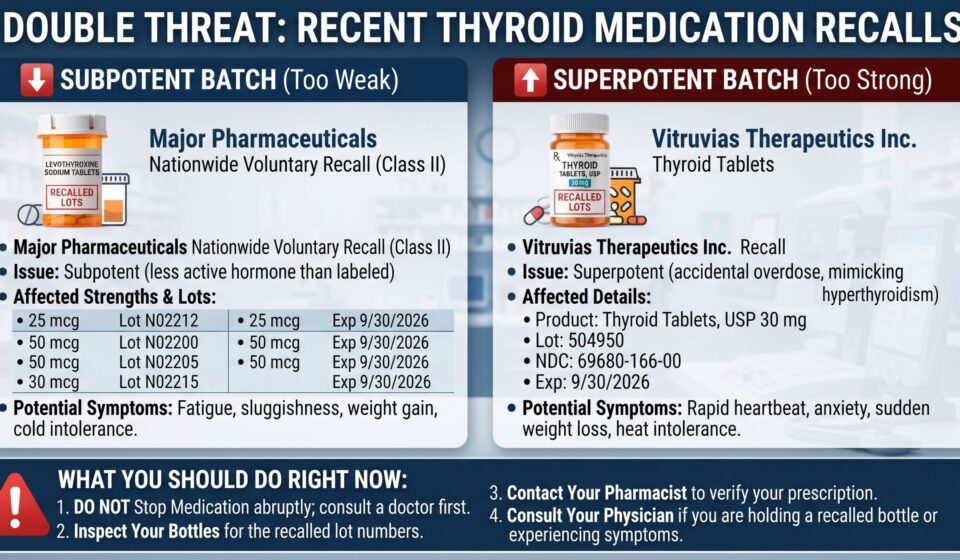
1. Major Pharmaceuticals: The Subpotent Batch Major Pharmaceuticals issued a nationwide, Class II voluntary recall for multiple lots of Levothyroxine Sodium Tablets because routine testing showed they were subpotent.
In plain English? The pills may contain less active hormone than what is printed on the label. If your medication is subpotent, it’s essentially like taking a partial dose—which can gradually let hypothyroid symptoms creep back in.
The affected lots include:
-
25 mcg: Lot N02212 (Exp. July 2026)
-
50 mcg: Lot N02200 (Exp. October 2026)
-
75 mcg: Lots N02172, N02288, N02296 (Exp. July or December 2026)
-
88 mcg: Lot N02310 (Exp. January 2027)
-
112 mcg: Lot N02203 (Exp. September 2026)
-
125 mcg: Lot N02266 (Exp. November 2026)
-
150 mcg: Lot N02167 (Exp. July 2026)
2. Vitruvias Therapeutics: The Superpotent Batch On the flip side, Vitruvias Therapeutics Inc. recalled a lot of its 30 mg Thyroid Tablets, USP (porcine-derived combination medications) because testing showed they could be superpotent—meaning they are stronger than intended.
Instead of getting a gentle daily baseline, taking a superpotent pill introduces an accidental overdose of thyroid hormones into your system, mimicking hyperthyroidism.
The affected batch details:
-
Product Name: Thyroid Tablets, USP 30 mg
-
Lot Number: 504950
-
National Drug Code (NDC): 69680-166-00
-
Expiration Date: September 30, 2026
Spotting the Signs: Too Little vs. Too Much
Your thyroid gland regulates everything from your metabolism and body temperature to your heart rate and mood. (In fact, beyond just medication, there are several everyday habits that affect your thyroid metabolism that you should be aware of). When your medication dose is compromised, your body will usually try to tell you.
-
If you got a subpotent pill (too little medicine): You might start feeling sluggish, experience unexpected weight gain, feel unusually cold when everyone else is comfortable, or battle persistent brain fog and fatigue.
-
If you got a superpotent pill (too much medicine): You might feel like your body is running on high anxiety—racing heartbeats or palpitations, sudden weight loss, a spike in blood pressure, shaky hands, nervousness, or an extreme intolerance to heat.
(If you are tracking broader wellness trends or trying to stay on top of other consumer safety alerts, you can browse through our ongoing health and safety reports for more updates).
What You Should Do Right Now
It is completely normal to feel a spike of anxiety when you see a recall headline involving a medication you take every single day. But take a deep breath and follow these practical steps:
-
Do NOT stop taking your medication cold turkey. Stopping your thyroid replacement abruptly can trigger severe health complications. Always keep taking your current routine until you talk to a professional.
-
Inspect your bottles. Look closely at the manufacturer, strength, expiration date, and lot number on your prescription label to see if they match the recalled lists above.
-
Call your pharmacist. If your bottle looks suspicious or you aren’t 100% sure, pick up the phone and call your local pharmacy. They have direct access to your fill history and can tell instantly if your specific batch came from the recalled shipments.
-
Talk to your doctor. If you are holding a recalled bottle—or if you have been feeling physically “off” lately—reach out to your healthcare provider. They can help you safely swap out the medication or order a quick blood test to check your thyroid levels.
Staying informed is half the battle. Check your cabinets, touch base with your pharmacist, and keep taking care of your health!