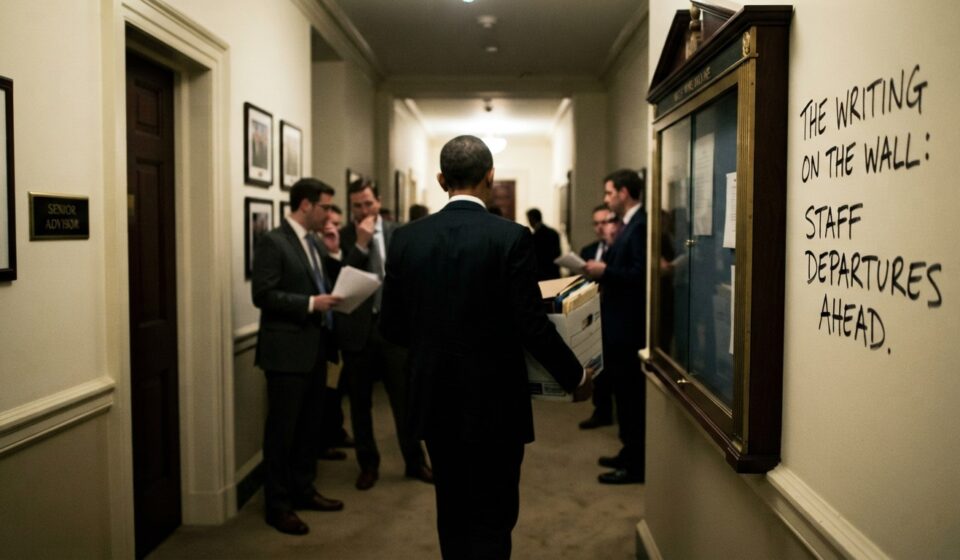

Let’s be honest: Washington has never been a quiet place. But lately, the revolving door at the West Wing feels like it’s spinning at warp speed.
With another wave of high-profile staff departures hitting the news—from senior communications teams to key legislative players—the rumor mill is working overtime. Is this just standard political housekeeping, or are we watching the early cracks in a much bigger foundation?
Let’s break down what’s really going on behind closed doors.
The Great West Wing Exit: Routine or Red Flag?
Every administration deals with burnout. Working in Washington is a 24/7 grind where sleep is optional and every mistake ends up on the evening news. Staffers leaving isn’t new.
What is catching people’s attention, though, is the timing and the volume. When core strategists and top communicators step down all at once right before a critical political stretch, it forces you to look twice.
Here is what is really driving the turnover:
-
The Burnout Factor: Let’s face it, the sheer pressure of modern politics chews people up. High-ranking officials often hit a wall after a couple of years of non-stop crisis management.
-
Shifting to Offense: Not every exit means a falling out. Often, trusted insiders are pushed out of the West Wing and onto external campaigns or advisory roles to shore up support where it’s needed most.
-
The “Acting” Game: Every time a Senate-confirmed official walks out the door, it leaves another vacancy filled by an “acting” director—softening Senate oversight and shifting the power balance.
Spin vs. Reality: How Both Sides Are Playing It
If you ask the administration’s supporters, this is all part of a master plan. They argue it’s a calculated refresh—bringing in fresh blood, swapping out tired players, and prepping the team for the brutal political battles ahead.
On the flip side? Critics and political analysts aren’t buying the polished PR spin. They see these rapid-fire exits as a flashing neon sign pointing straight toward internal friction, policy gridlock, and a growing reluctance to stick around for what’s coming down the pike.
Why It Actually Matters to You
It’s easy to look at Washington drama like a reality TV show that has nothing to do with everyday life. But leadership chaos at the top trickles down fast.
When the people writing the policies, running the agencies, and handling the press are constantly packing their boxes, governance slows to a crawl. Legislative priorities stall, messaging gets messy, and the government’s ability to tackle actual problems takes a backseat to internal damage control.
The Bottom Line
Whether this is a clever tactical reset or the prelude to a full-blown administrative storm is still up for debate. But one thing is crystal clear: the lineup is changing, and the ripple effects are going to shape the political landscape for months to come.
What’s your take on all the shuffling in Washington? Do you think it’s just business as usual, or is something bigger brewing? Drop your thoughts in the comments below!