
For years, the conversation around cholesterol felt pretty predictable: watch your diet, check your numbers during midlife physicals, and try not to worry too much until later in life.
Not anymore.
In March 2026, the American College of Cardiology (ACC), the American Heart Association (AHA), and nine other leading medical groups officially rewrote the playbook. Throwing out the aging 2018 standards, they dropped the brand-new “2026 Guideline on the Management of Dyslipidemia.”
It isn’t just a minor tweak; it’s a complete paradigm shift designed to catch heart disease decades before it ever has a chance to strike. Here is the breakdown of what changed, why it matters, and how it impacts you.
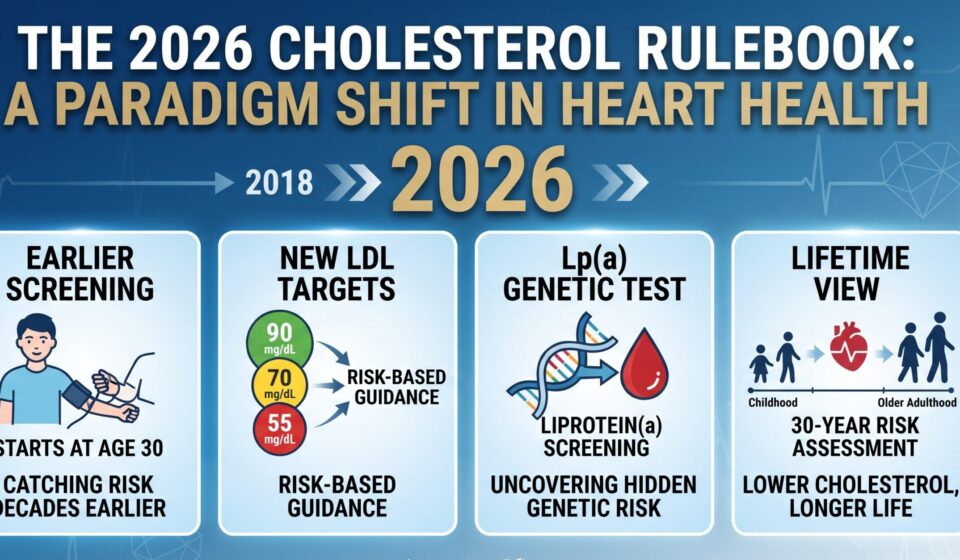
1. The Numbers Got Tighter: Meet Your New LDL Targets
The old approach treated high cholesterol as a problem to manage once you hit middle age. The new guidelines flip that script, emphasizing lower targets sustained over a longer stretch of your life.
Depending on your overall health and risk level, your target low-density lipoprotein (LDL)—often called the “bad” cholesterol—now falls into three distinct tiers:
-
90 mg/dL for people without existing cardiovascular disease
-
70 mg/dL for people with significant risk factors
-
55 mg/dL for people at the highest risk
By lowering these bars significantly, doctors are aiming to prevent plaque buildup long before it becomes a crisis.
2. Cholesterol Screening Now Starts at Age 30
If you thought heart health screenings were something to worry about in your 40s or 50s, think again. The new guidelines push the starting line back to age 30.
Why so young? Because heart disease doesn’t happen overnight—it develops silently over decades.
To capture that full picture, doctors are moving beyond traditional 10-year risk estimates and introducing a 30-year risk assessment. This longer window helps flag individuals who might look completely fine in the short term, but carry a hidden, cumulative risk over their lifetimes. Even childhood and adolescent habits are taking center stage, emphasizing that healthy lifestyle choices should start early.
3. The Secret Genetic Test: Meet Lipoprotein(a)
Ever heard of Lipoprotein(a), or Lp(a)? If not, you aren’t alone.
The guidelines now recommend a one-time screening for this genetic risk factor. Unlike LDL cholesterol—which responds heavily to what you eat and how you move—Lp(a) levels are written into your DNA. Because routine panels often miss it, this single early test acts as a secret weapon to uncover hidden, inherited risks that lifestyle changes alone can’t fix.
4. Lifestyle Still Rules (But Meds Step in Sooner)
Even with all the high-tech updates and new metrics, the medical community still relies on the heavy hitters of daily health:
-
Avoiding tobacco products
-
Prioritizing regular physical activity
-
Getting healthy, restorative sleep
-
Maintaining a balanced weight
That said, medication is stepping in earlier for specific groups who need a head start. This includes young adults with LDL levels of 160 mg/dL or higher, people with heavy family histories of heart disease, and those dealing with familial hypercholesterolemia (a genetic condition causing severely high cholesterol).
The Bottom Line
With lower LDL targets, screenings starting a decade earlier, and a sharp focus on lifelong cardiovascular health, the 2026 guidelines are all about proactive protection. It is a transition from reacting to heart attacks to outsmarting them before they ever happen.