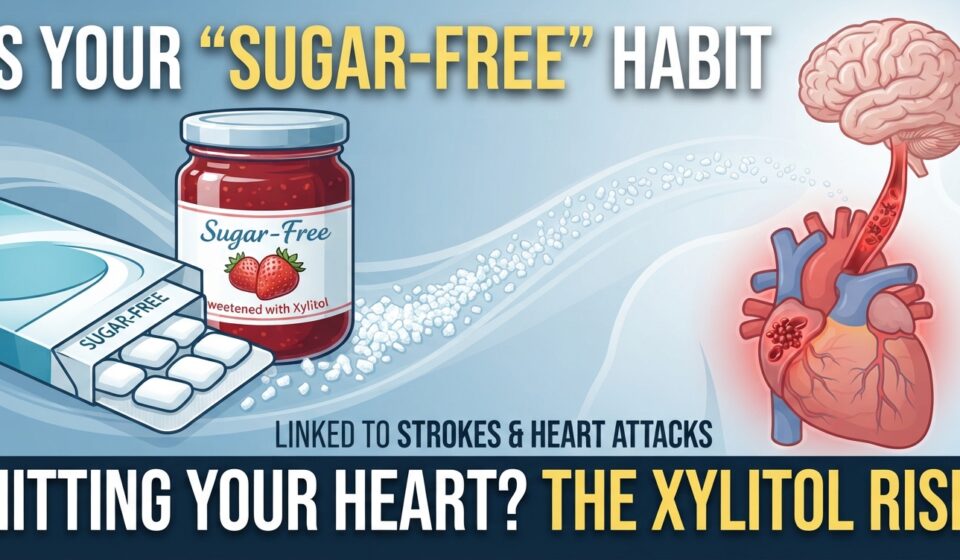

Ever look at the back of a “keto-friendly” snack or your favorite pack of sugar-free gum and feel pretty good about skipping the sugar? You’re definitely not alone. Millions of us reach for sugar-free options thinking we’re doing our bodies a massive favor, especially if we’re trying to watch our weight or keep our blood sugar in check.
But lately, scientists have been taking a hard look at one of the most common sugar substitutes out there: xylitol. And the news isn’t great.
Recent large-scale studies are linking high levels of xylitol to a seriously increased risk of heart attacks and strokes. Let’s break down what researchers found, why it happens, and what it actually means for your daily grocery run.
What Did the Research Actually Find?
Researchers tracking thousands of patients over several years wanted to see how popular sugar alcohols affected long-term health. The results caught a lot of experts by surprise:
-
The Risk Factor: People who had the highest levels of xylitol circulating in their blood were up to 57% more likely to suffer a major heart event—like a heart attack or stroke—over a multi-year period compared to those with little to no xylitol in their system.
-
It Adds Up: The studies showed a clear dose-dependent pattern. Basically, the more xylitol floating around, the higher the risk.
-
Standing on Its Own: Even when researchers adjusted for things like age, high blood pressure, diabetes, and smoking, the link between xylitol and heart trouble still stood strong.
Why Does a Sugar Substitute Affect Your Heart?
It sounds weird, right? How could something meant for your teeth or your waistline hurt your heart?
It all comes down to blood clotting. When you consume high amounts of xylitol, it can actually make your blood platelets much more “sticky” and reactive. If platelets clump together too easily inside your blood vessels, they can form a clot. If that clot breaks loose and travels to your heart or brain, it spells trouble.
Sure, our bodies naturally make tiny amounts of xylitol on their own, and you can find trace amounts in some fruits and veggies. But the stuff pumped into commercial “diet” foods? That can be up to 1,000 times higher than what nature intended.
Where Is Xylitol Hiding?
You probably know it’s in sugar-free gum and mints, but xylitol sneaks into a lot of other everyday items marketed as healthy:
-
Sugar-free or low-calorie jams and jellies
-
“Keto” and diabetic-friendly baked goods and protein bars
-
Cough drops and chewable vitamins
-
Certain brands of toothpaste and mouthwash
Should You Throw Everything Out?
Before you completely panic and clear out your pantry, take a breath. Here is a realistic way to look at it:
-
Don’t Swap Back to Heavy Sugar: Refined sugar and high-fructose corn syrup come with their own massive list of health problems, including obesity, type 2 diabetes, and heart disease. Trading xylitol for mountains of regular sugar isn’t the fix.
-
Check Your Labels: If you chew a piece of gum once in a while or use xylitol toothpaste, you’re likely fine. The real concern points to heavy, daily consumption of ultra-processed “diet” foods loaded with sugar alcohols.
-
Keep It Balanced: At the end of the day, the safest bet is always leaning toward whole, minimally processed foods rather than relying on heavily engineered packaged snacks.
Have you started noticing more sugar substitutes on ingredient labels lately, or are you trying to cut back on them? Let’s talk about it in the comments!https://usanetworkdaily.com/category/health/
.At the end of the day, making smarter swaps goes beyond just cutting out artificial additives. Check out our guide on simple daily habits for a healthier heart and lifestyle to learn more about keeping your wellness routine balanced.”