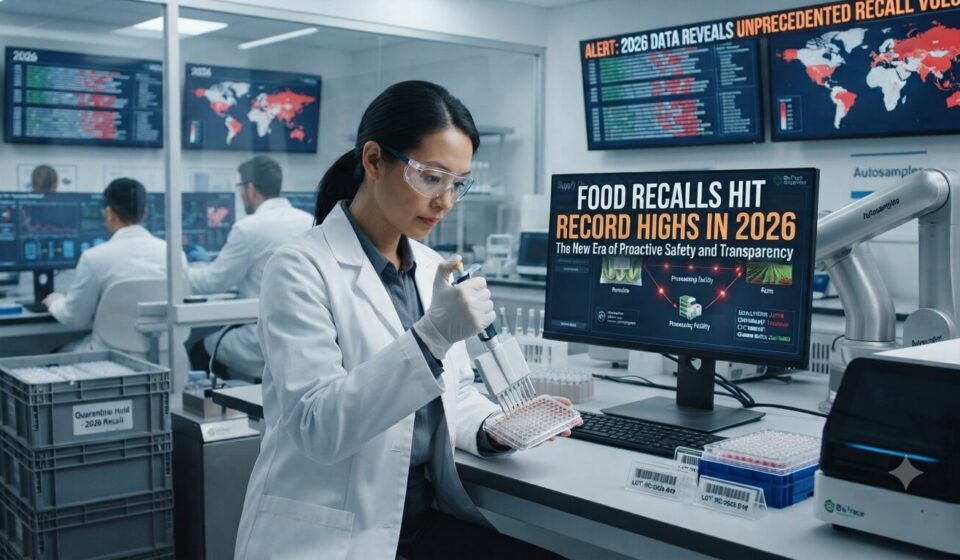

If it feels like you can’t scroll through the news without seeing another food recall this year, that’s not a coincidence. It’s not your imagination either. The numbers actually back it up, and they’re bigger than most people realize.
The Numbers Behind the Surge
According to Sedgwick’s latest U.S. Product Safety and Recall Index report, food and drink recall events climbed from 127 in the first quarter of 2025 to 140 in the first quarter of 2026. That’s a six-year high for first-quarter recall activity alone.
The volume tells an even bigger story. FDA-regulated food recalls affected 57.4 million units in Q1 2026, nearly double the 28.76 million units recalled just one quarter earlier. Seven individual recalls each affected more than a million units on their own. Meanwhile, USDA-regulated recalls, which cover meat, poultry, and egg products, hit 37.1 million pounds in the same quarter. That’s the third-highest total in more than two decades.
Oddly enough, the total number of recall events actually went down slightly during that stretch, dropping from 877 in Q4 2025 to 785 in Q1 2026. Fewer recalls happened, but the ones that did happen were far bigger. A handful of massive incidents, not a steady drip of small ones, are driving most of this surge.
What’s Actually Causing These Recalls
Undeclared allergens remain the single biggest culprit. They accounted for 57 separate FDA food recall events in Q1 2026 alone, up from 49 the quarter before. Milk was the most commonly missed allergen, tied to 17 recalls, followed by soy at 14 and gluten at 4.
Foreign materials came in second, responsible for 24 recall events. This is the category that covers things like glass, plastic, and metal fragments ending up in food during processing, and it’s the exact issue behind several recent high-profile cases, including Walmart’s recent Pillsbury bread roll recall and the massive Ajinomoto frozen meal recall that covered nearly 37 million pounds of chicken and pork products.
Bacterial contamination rounded out the top three causes, responsible for 22 recall events. This category includes the kind of pathogens driving this year’s other major headlines, like the ongoing cyclospora outbreak tied to shredded lettuce, which we’ve been tracking closely on this site.
Why This Is Happening Now
Experts don’t agree on a single cause, which is honestly part of the story. Renee Fellman, a turnaround expert who consults with food companies on operational failures, pointed to something less technical than contamination science. She argued the bigger issue is mismanagement of people, processes, and systems, and specifically called out what she described as a general decline in attention to detail across the industry.
Chris Harvey, a senior vice president at Sedgwick, framed it more around economic pressure. He noted that ongoing economic uncertainty should be pushing companies to tighten their compliance practices and stress-test their recall plans against an increasingly complex regulatory environment, essentially arguing that cost-cutting and contamination risk tend to move in opposite directions.
There’s also a more reassuring explanation buried in the data. Companies appear to be getting faster and more cautious about pulling products at the first sign of trouble, rather than waiting for confirmed illnesses to pile up. That shift toward prevention over reaction means more recalls get issued for smaller, earlier-stage risks that might have gone unreported in past years. More recalls isn’t automatically bad news. Sometimes it means the system is catching problems sooner.
The Recalls Behind the Numbers
This year’s headlines back up the data. Salmonella-contaminated eggs, spoiling batches of Amy’s lentil soup, and salmonella-linked chia seeds have all made news in 2026. Our coverage of the cyclospora outbreak tied to shredded lettuce remains one of the more serious ongoing incidents this year, and it connects directly to the same supply chain vulnerabilities driving this broader recall surge. If you want the deeper background on how a parasite like that spreads through produce in the first place, our guide to cyclosporiasis symptoms and causes covers that, and our piece on washing produce explains why rinsing alone often isn’t enough to protect against it.
For a broader look at what else has been pulled from shelves this year, our earlier roundup of FDA food recalls and summer food safety is worth revisiting, since several of those incidents are part of the same trend this data confirms.
What This Means for Your Kitchen
None of this means the food supply is suddenly less safe than it used to be. If anything, more aggressive recall practices suggest the opposite: companies and regulators catching problems earlier and pulling products faster than they might have a few years ago. But it does mean paying attention to recall notices matters more than it used to, simply because there are more of them, and the ones that do happen tend to affect more product at once.
Checking lot numbers and expiration dates before assuming a recall doesn’t apply to you is worth the extra thirty seconds. Given how often milk and soy are quietly missing from ingredient labels this year, it’s also worth a second look at packaging if anyone in your household manages a food allergy.
Bottom Line
Food recalls hitting record highs in 2026 isn’t a single story with a single cause. It’s undeclared allergens slipping through labeling, foreign materials making it further into the supply chain than they should, and a food industry that seems to be reacting faster and more cautiously than in years past. Whether that adds up to a safer food system or a more chaotic one probably depends on which part of the story you’re looking at. Either way, the recall notices aren’t slowing down anytime soon.
Sources: Sedgwick, Fortune, Quality Assurance & Food Safety, U.S. News.