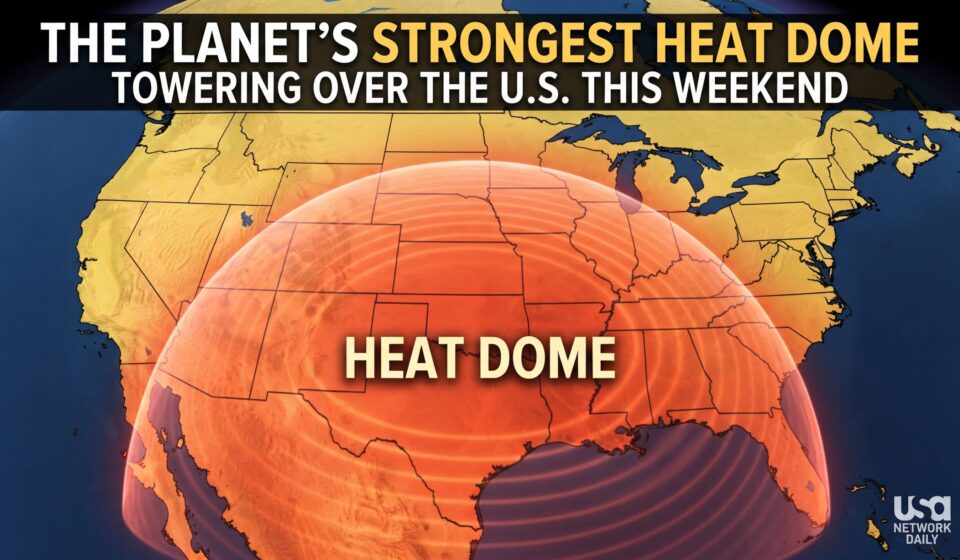

It’s been a summer of nonstop heat domes. Now another one is forming, and this time, it’s set to become the strongest heat dome on the planet, centered directly over the southern United States.
Here’s what’s coming, and who’s in the hot seat this time.
How Strong Is This One, Really?
This heat dome will grow into the most powerful one on Earth this weekend. That’s not hype, it’s a direct measure of atmospheric pressure intensity, and this system is forecast to top every other heat dome currently active anywhere on the planet.
It’ll be centered over the South this time. That’s a shift from earlier heat domes this summer, which mostly targeted the West, the Plains, and the East Coast at different points.
What Should You Expect?
Extreme heat and humidity are expected to linger well into next week. That combination matters more than the raw temperature number alone, high humidity traps heat close to the body and makes it much harder to cool down, even overnight.
This is officially the summer of the heat dome. The pattern’s been relentless: Europe saw record-breaking heat in May and June. A slow-moving heat dome scorched the East Coast in early July. Then another system spiked temperatures to 115 degrees in Montana. Now this one is set to top them all.
Why Do We Keep Getting These?
A heat dome forms when a large area of high pressure parks itself over a region and traps hot air underneath, like a lid on a pot. The high pressure also suppresses clouds and rain, letting sunlight bake the ground directly for days at a time.
Human-caused climate change is making these events more frequent and more intense. Multiple studies this year have found that heat waves like this one would be far less likely, or far less severe, without the extra warming from greenhouse gas emissions.
Why This Matters More Than It Might Seem
Heat is the deadliest type of extreme weather in the United States. It kills more people annually than tornadoes, hurricanes, and lightning combined, according to National Weather Service data. Emergency room visits for heat-related illness spike sharply on days classified as “major” or “extreme” heat risk.
This isn’t an isolated event, either. As of early August, this year’s ongoing heat wave has already been linked to dozens of confirmed heat-related deaths in Arizona’s Maricopa County alone, with weeks of summer heat still ahead.
How to Stay Safe
- Watch for heat exhaustion symptoms: heavy sweating, dizziness, nausea, and a fast pulse. Move to a cool space and hydrate right away if you notice them.
- Check on older neighbors and relatives. Older adults and people without reliable air conditioning face the highest risk.
- Use cooling centers if you don’t have AC. Many cities open them during extreme heat events, check your local government’s website for locations.
- Avoid strenuous outdoor activity during peak afternoon heat, and reschedule for early morning or evening if possible.
- Never leave kids or pets in parked cars, even briefly, temperatures inside a car can spike dangerously within minutes.
For more on how this heat dome compares to earlier events this summer, we covered the rising COVID cases alongside this same stretch of extreme weather in our recent piece on what’s rising in America’s health landscape this summer, heat and illness both tend to spike together during stretches like this.
Bottom Line
The strongest heat dome on the planet is about to sit directly over the southern United States, bringing extreme heat and humidity that’s expected to linger into next week. It’s the latest in a summer that’s already produced multiple record-breaking heat events. For more on how this story develops, check the National Weather Service’s heat forecast for your area, and check out our latest health coverage on the site.
This article will be updated as the heat dome develops.