
You’ve heard it a thousand times. Get enough sleep. Move your body. Eat well.
But why do these three things carry so much weight? Here’s what’s actually happening inside your body when you get them right, and when you don’t.
Why Sleep Matters So Much
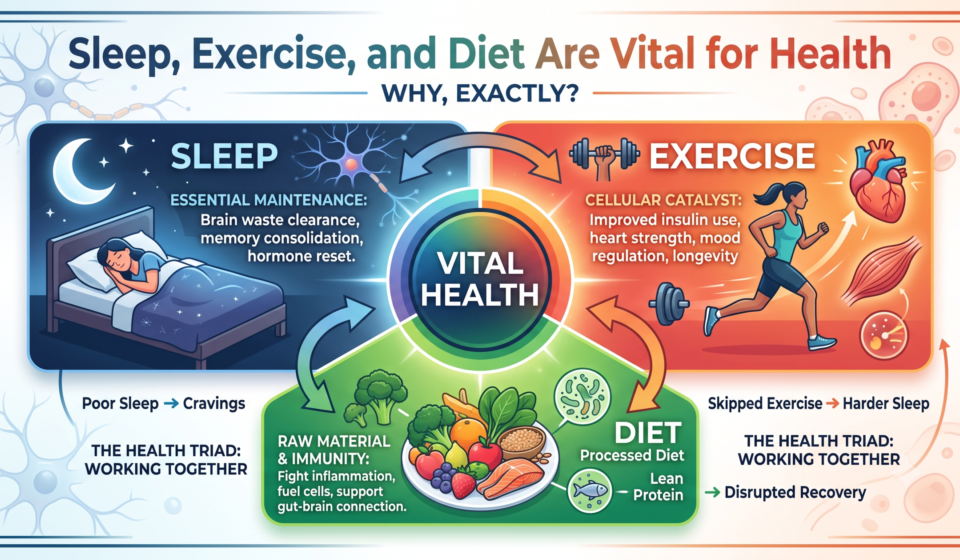
Sleep isn’t just downtime. Instead, it’s when your body runs essential maintenance.
During deep sleep, your brain clears out waste products that build up during the day, including proteins linked to Alzheimer’s disease. Meanwhile, your body repairs muscle tissue, consolidates memories, and resets hormone levels that control hunger and stress.
Skimp on sleep, and the effects show up fast. Just one night of poor sleep can raise levels of the stress hormone cortisol, weaken immune function, and impair decision-making the next day. Over time, chronic sleep deprivation gets linked to higher risks of heart disease, diabetes, and depression.
Adults generally need 7 to 9 hours a night. Consistency matters too. Going to bed and waking up at similar times each day helps regulate your body’s internal clock, which affects everything from digestion to mood.
Why Exercise Does More Than Burn Calories
Movement isn’t just about weight management. In fact, exercise triggers changes at a cellular level.
Physical activity improves how your body uses insulin, which helps regulate blood sugar and lowers diabetes risk. It also strengthens your heart muscle, improves circulation, and helps keep blood pressure in a healthy range.
There’s a mental health angle too. Exercise releases endorphins and other mood-regulating chemicals, which is part of why a walk can genuinely improve a bad day. Research also links regular activity to lower rates of anxiety and depression, along with better long-term brain health as people age.
You don’t need extreme workouts to get these benefits. The CDC recommends 150 minutes of moderate activity per week, roughly 30 minutes, five days a week. Walking counts. So does gardening, dancing, or playing with your kids in the backyard.
Why Diet Shapes Nearly Everything Else
Food isn’t just fuel. It’s also raw material. Your body uses what you eat to build cells, produce hormones, and maintain your immune system.
A poor diet doesn’t just add pounds. It can also drive chronic inflammation, a root contributor to heart disease, certain cancers, and autoimmune conditions. On the flip side, a diet rich in vegetables, fruits, whole grains, and lean protein supports steady energy, better mood regulation, and stronger immune defense.
Gut health plays a bigger role here than most people realize too. Your digestive system houses trillions of bacteria that influence digestion, immunity, and even mental health through what’s often called the gut-brain connection. Diet directly shapes which bacteria thrive in there.
Why These Three Work Together
Here’s the part that often gets missed: sleep, exercise, and diet don’t operate in isolation. Instead, they influence each other constantly.
Poor sleep, for example, increases cravings for sugar and processed food the next day. Skipping exercise can make it harder to fall asleep at night. And a diet high in processed foods can disrupt the very sleep cycles your body needs to recover from a workout.
In other words, improving one area often makes the other two easier. That’s why health experts tend to treat these three as a package deal rather than separate goals.
Bottom Line
Sleep, exercise, and diet aren’t just wellness buzzwords. They’re the three biggest levers your body has for maintaining itself, from clearing brain waste at night to regulating blood sugar and fighting inflammation. Small, consistent improvements in all three tend to matter more than perfection in just one. For more health explainers like this, check out our latest health coverage on the site.